

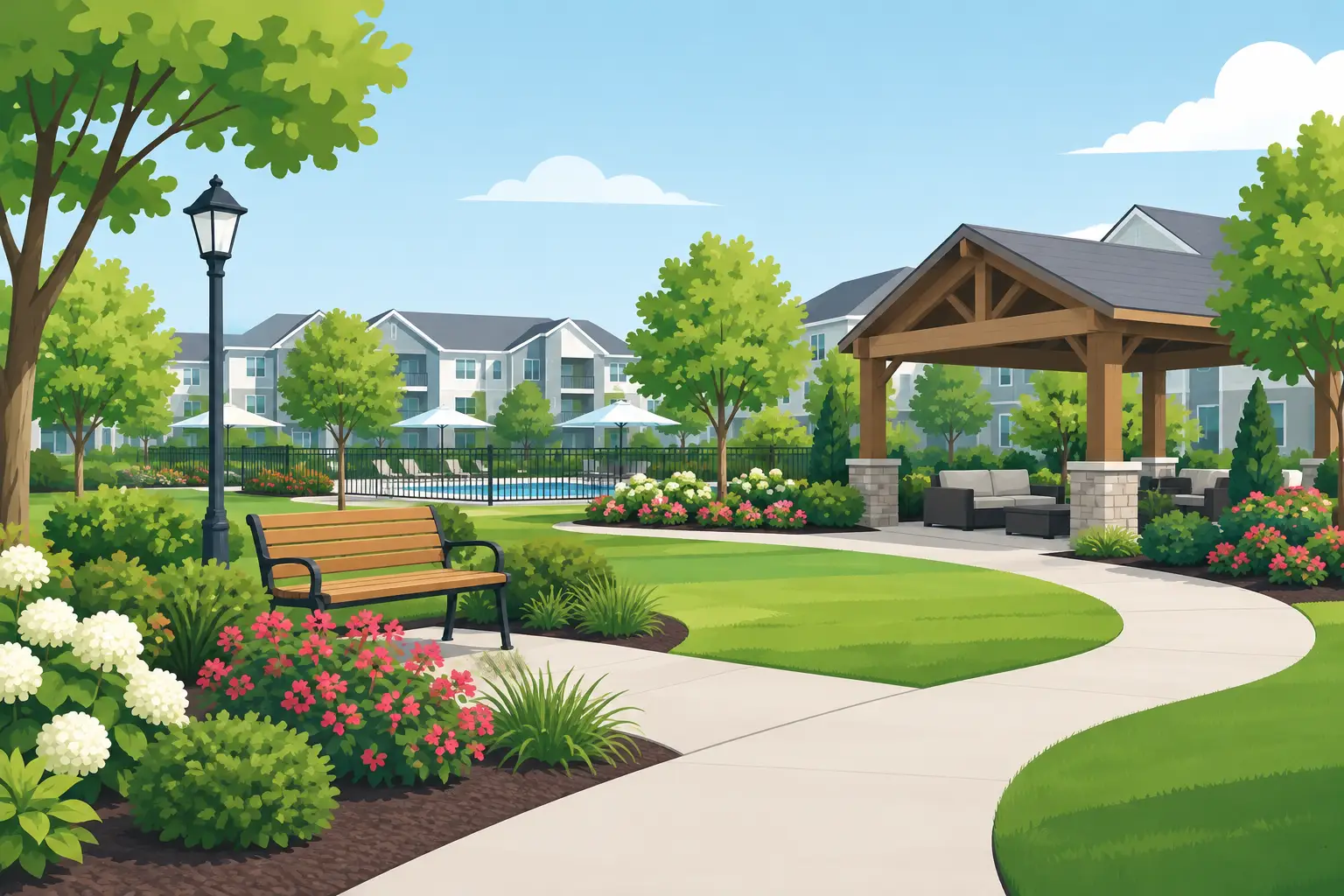
Best HOA Common Area Upgrades for Curb Appeal

A faded entrance sign, bare mulch beds, and brown turf can make a well-managed neighborhood feel neglected before a visitor ever reaches the first home. The best HOA common area upgrades do more than freshen up appearances. They help protect property values, make maintenance more manageable, and give residents confidence that their association is investing wisely.
For HOA boards and community managers in Middle Georgia, the right project is rarely the most expensive one. It is the upgrade that fits the community’s budget, looks good through the growing season, and can be maintained consistently after installation. A new landscape feature that demands constant attention may create more problems than it solves. The goal is a clean, durable outdoor space with a plan behind it.
Start With the Areas Residents See Most
Not every common area needs an upgrade at once. Begin with the places that shape first impressions: neighborhood entrances, monument signs, mailbox areas, pool approaches, walking paths, retention pond edges, and clubhouse landscaping. These locations are used or seen often, so improvements there tend to have the greatest impact.
Walk the property with a simple checklist. Look for overgrown shrubs blocking signs, thin grass, exposed irrigation heads, washed-out mulch, dead plants, uneven bed lines, and areas where water stands after rain. Photos taken from the street and from a driver’s point of view can be especially useful. They show what residents, guests, and prospective buyers actually notice.
This review also helps separate maintenance issues from construction needs. A landscape bed may only need pruning, fresh mulch, and better weed control. Another may need a full redesign because the plants have outgrown the space or were never suited to the site.
Best HOA Common Area Upgrades That Deliver Value
Refresh entrance landscaping
Entrance landscaping is often the strongest place to invest. A clean monument sign surrounded by healthy plants, crisp edging, and fresh mulch immediately makes the community feel cared for. This does not always require a major renovation. Removing tired plant material, reshaping beds, adding a balanced mix of shrubs and seasonal color, and correcting irrigation coverage can make a noticeable difference.
Choose plants based on mature size, sun exposure, and routine maintenance needs. A shrub that looks small and neat at installation can quickly cover signage, sidewalks, or sight lines if it is planted too close. Well-spaced, durable plantings usually serve an HOA better than crowded beds filled with high-maintenance varieties.
Improve irrigation before replacing plants
Irrigation is one of the most practical common-area upgrades because it protects other landscape investments. If turf stays dry in one area while another area is constantly soggy, new sod or plants will struggle no matter how attractive the design looks on paper.
An irrigation inspection can identify broken heads, leaks, clogged nozzles, poor spray coverage, controller problems, and zones that run too long or not long enough. Adjusting a system for seasonal weather can also reduce wasted water. In Middle Georgia, landscape needs can change quickly between heavy summer heat, rain periods, and cooler months.
For communities with older systems, targeted repairs may be enough. In other cases, adding zones or updating inefficient components may make more sense. The right answer depends on the size of the property, the condition of the system, and the cost of ongoing water use.
Repair thin turf and high-traffic areas
Common-area grass takes more abuse than most private lawns. Residents cut across corners, children play near amenities, and service vehicles may travel along the same edges week after week. Thin turf, ruts, and muddy walkways can make a property look poorly maintained and create safety concerns.
Sod can be a good solution for highly visible areas that need an immediate improvement, especially near entrances, clubhouses, and pool facilities. Seeding may cost less in some situations, but it takes longer to establish and needs careful watering. Before either option, address the cause of the problem. Compacted soil, shade, drainage issues, or irrigation gaps can quickly ruin a new lawn.
Add practical mulch and bed edging
Fresh mulch is one of the simplest ways to make landscape beds look finished. It helps retain moisture, moderates soil temperature, and gives plantings a clean backdrop. Defined edging creates a sharper separation between turf and beds, which makes routine mowing and trimming easier.
There is a balance to strike. Mulch piled too deeply against plant stems can trap moisture and encourage problems. Decorative stone can reduce mulch replacement in some areas, but it is harder to clean, can migrate into turf, and may hold heat around plants. Mulch is often the more flexible choice for beds that will be replanted or adjusted over time.
Improve drainage around shared spaces
Standing water is more than an eyesore. It can damage turf, weaken plant roots, create muddy spots, and leave residents frustrated around sidewalks, mail kiosks, and recreation areas. If water regularly collects in the same place, mowing alone will not correct it.
Drainage improvements may include regrading, swales, catch basins, drain lines, or reshaping landscape beds to direct water away from high-use areas. These projects can be less visible than a new entrance bed, but they often prevent recurring maintenance costs and protect the work that follows. It is usually wiser to solve drainage before installing new turf or plants nearby.
Create useful gathering areas carefully
Benches, small seating areas, shade trees, improved pool approaches, and simple landscape enhancements around a clubhouse can make a neighborhood feel more inviting. These upgrades work best when they support how residents already use the space.
A bench beside a walking path may be welcome. A large gathering area with no parking, shade, or clear purpose may not get used. Consider ongoing needs before approving an amenity project: mowing around structures, trimming, cleaning, irrigation, replacement parts, and liability concerns all belong in the decision.
Build an Upgrade Plan Around Maintenance
The strongest projects are designed with future service in mind. An HOA can save money upfront by choosing dense plantings or complicated bed shapes, then spend more year after year trying to keep them neat. Simple layouts, accessible irrigation components, appropriate plant spacing, and clear mowing lines help control that burden.
When planning an improvement, ask three questions: What will this cost to install? What will it cost to maintain each season? What happens if a plant, irrigation part, or turf section fails? Those answers help the board compare projects fairly instead of choosing only by the initial proposal amount.
A phased plan is often the most realistic approach. Prioritize visible entrance areas and urgent irrigation or drainage concerns first. Then schedule secondary spaces, such as mailbox areas and amenity landscaping, as the budget allows. This keeps the community moving forward without placing unnecessary pressure on annual dues or reserves.
For a large property, it can help to organize priorities into four categories:
Safety and drainage concerns that should be addressed promptly
Irrigation repairs that protect turf and landscape beds
High-visibility improvements at entrances and amenities
Lower-priority enhancements that can be phased in later
Choose a Partner Who Can Maintain the Result
Landscape construction and routine maintenance should work together. A contractor installing a new bed needs to understand how it will be mowed, edged, irrigated, pruned, and refreshed after the project is complete. Otherwise, the board may end up coordinating several vendors and dealing with gaps between installation and upkeep.
Peach Lawn Pros helps Middle Georgia HOAs manage recurring mowing, landscape improvements, and irrigation repair through one local team. That can make it easier to move from identifying a problem to completing the work and maintaining it afterward.
The best HOA common area upgrades are not always the flashiest projects. They are the improvements that make the property easier to care for, more welcoming to residents, and better prepared for the next season. Start with one highly visible area, correct the conditions that caused it to decline, and build from there.
Comments