

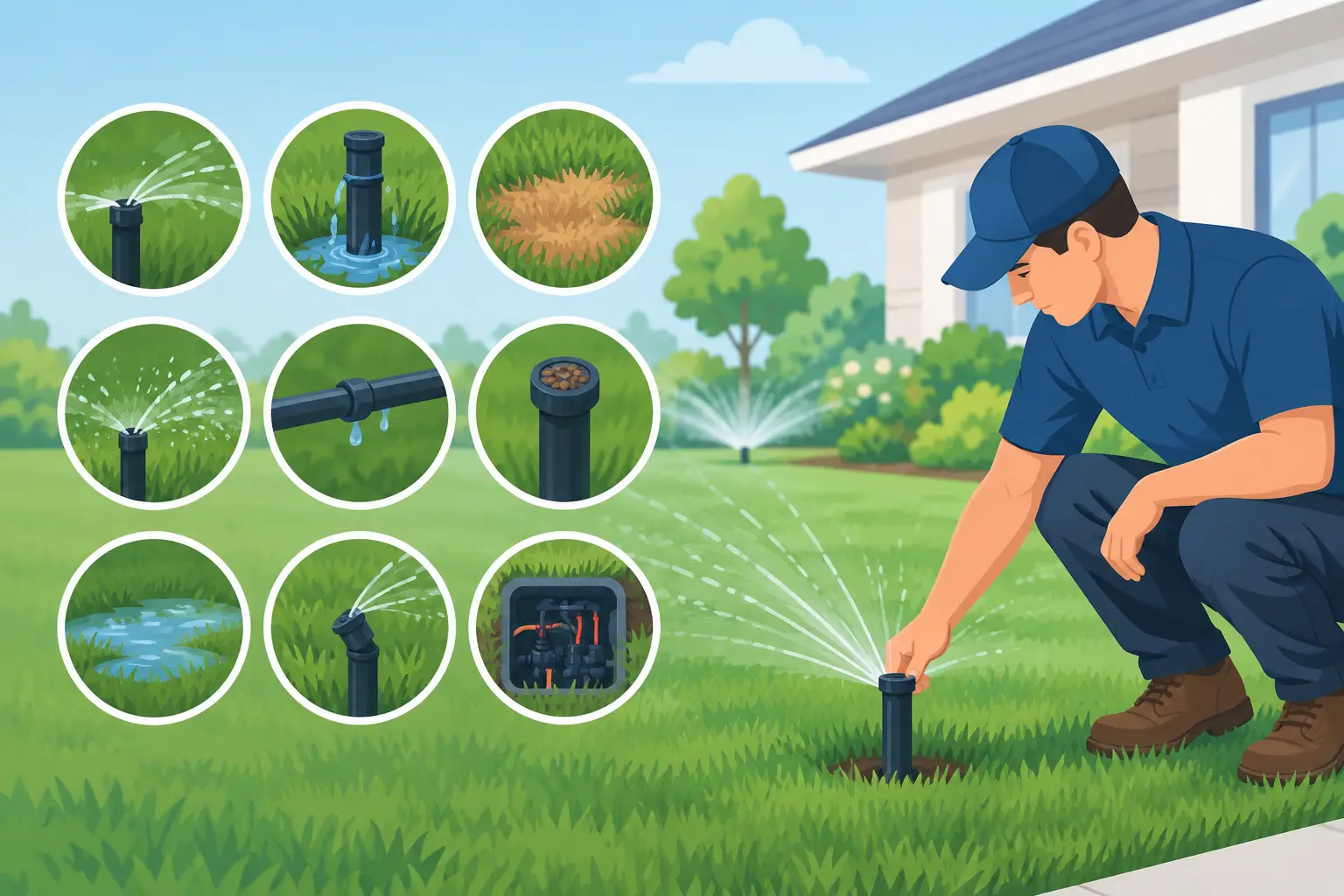
9 Clear Signs Your Irrigation Needs Service

A sprinkler system can be running on schedule and still leave parts of your property thirsty, soggy, or expensive to maintain. Knowing the signs your irrigation needs service helps you catch small problems before they turn into brown turf, damaged landscaping, high water bills, or muddy common areas.
For homeowners, an irrigation issue can quickly take the enjoyment out of a well-kept yard. For HOAs and commercial properties, it can affect curb appeal across an entire entrance, lawn, or landscape bed. A prompt repair keeps water going where it belongs and helps your landscape look cared for without wasting resources.
Signs Your Irrigation Needs Service
1. Dry patches appear while other areas stay green
A brown or thinning spot in the lawn does not always mean the grass is unhealthy. If nearby turf is green and growing normally, that area may not be getting enough water. A clogged sprinkler nozzle, broken head, poor coverage pattern, or underground leak can all create dry zones.
Pay attention to patterns. A dry strip along a driveway, a patch around a tree, or a section at the edge of a landscape bed often points to an irrigation coverage problem rather than a general lawn-care concern. Seasonal heat in Middle Georgia can make these trouble spots show up quickly.
2. Water pools around sprinkler heads or in low spots
Standing water after an irrigation cycle is another clear warning sign. Some water around a head right after it pops up is normal, but puddles that remain long after the system shuts off are not. The cause may be a damaged sprinkler head, a cracked fitting, a valve that is not closing completely, or a line leak below the surface.
Besides wasting water, pooling can soften the ground and damage turf roots. It may also create slick walkways, muddy entry areas, or mosquito-friendly spots around a property. On commercial sites and HOA common areas, those issues are worth addressing before they become complaints or safety concerns.
3. Your water bill suddenly increases
A higher water bill can have several causes, especially during hot, dry stretches. But if usage rises without a change in your watering schedule, your irrigation system deserves a closer look. A slow underground leak can waste a surprising amount of water without creating an obvious puddle.
Compare recent bills with the same period last year if you can. Also consider whether you added new landscaping, adjusted run times, or had unusually dry weather. If none of those factors explain the change, an irrigation inspection can help locate the problem.
4. Sprinkler heads spray unevenly or barely spray at all
A healthy sprinkler head should rise properly, distribute water in the intended pattern, and retract when the cycle ends. Heads that spray a weak stream, mist into the air, stick in one position, or spray directly onto pavement are not doing their job.
Sometimes the fix is as simple as clearing a clogged nozzle or adjusting a head that has shifted. Other times, low pressure, a damaged line, or a broken internal component is involved. Replacing or repairing the visible head without checking the rest of the zone can leave the underlying problem unresolved.
5. Water is hitting sidewalks, buildings, or driveways
Watering concrete does not help your lawn. It raises your water use, can contribute to runoff, and may leave stains or slippery areas on hard surfaces. Overspray usually happens when a sprinkler head has been bumped by a mower, settled in the soil, been installed incorrectly, or no longer matches the area it is watering.
This is especially common near driveways, parking lots, walkways, and building foundations. An adjustment may solve the issue, but damaged heads and poor zone design may require more than a quick turn of the nozzle. The goal is even coverage of the landscape, not simply getting water out of the system.
6. One irrigation zone will not turn on or shut off
If one area of your system does not run when it should, the issue may be electrical, mechanical, or both. A faulty controller setting, damaged wire, failed solenoid, or valve problem can prevent a zone from opening.
A zone that continues running after its scheduled time is more urgent. Shut off the water supply if possible and arrange service promptly. A valve that will not close can waste a large amount of water and saturate the landscape in a short time.
7. The controller loses its schedule or behaves unpredictably
The controller is the brain of your irrigation system, but it still needs occasional attention. If the clock resets, zones run at random times, the display is blank, or the system skips its normal schedule, the controller may have a programming, power, battery, or wiring issue.
Before assuming the controller has failed, check for a power outage, tripped breaker, or seasonal schedule change. If settings are correct but the system still does not operate consistently, professional troubleshooting can prevent missed watering cycles and unnecessary replacement costs.
8. There is a soft, wet area even when the system is off
A consistently damp patch in the yard is one of the more serious signs of a possible underground leak. You may notice greener-than-normal grass, sinking soil, a soft spot underfoot, or water slowly surfacing near a valve box. Because the leak is below ground, it can continue unnoticed for weeks.
Not every wet area is an irrigation problem. Drainage issues, rain runoff, and shade can also keep soil damp. The difference is that an irrigation leak often persists in dry weather or becomes more noticeable after a particular zone runs. Identifying the source correctly matters before any repair work begins.
9. Landscape beds look stressed despite regular watering
Shrubs, flowers, and new plantings can be harder to read than turf. Leaves may wilt, turn brown at the edges, or drop early from too little water. Overwatering can cause many of the same symptoms, especially when roots stay wet and lack oxygen.
Check the soil before increasing your run time. If it is dry a few inches below the surface, the plants may not be receiving enough water. If it is wet and heavy, the issue could be drainage, a leak, or an irrigation schedule that is too aggressive. More water is not always the answer.
What to Do When You Notice Irrigation Problems
Start by watching the system run through each zone. Look for broken heads, weak spray patterns, runoff, water collecting in unusual places, and areas the sprinklers are missing. Take note of which zone is involved and when it runs. That information makes diagnosis much easier.
Avoid digging around suspected lines unless you know the location of utilities and irrigation components. A small leak can become a larger repair if a line, wire, or fitting is damaged while searching for it. For systems serving larger landscapes, regular checks are particularly useful because a problem in one zone may not be obvious from the street or parking area.
Peach Lawn Pros provides irrigation repair and installation for property owners who want a practical solution without coordinating multiple outdoor service providers. Whether the problem is a broken head, poor coverage, a valve issue, or a system that needs attention before the next dry spell, timely service can protect both the landscape and the water bill.
A working irrigation system should be easy to forget about. If you are noticing uneven grass, puddles, overspray, or unexplained water use, it is a good time to have the system checked and keep your property on track.
Comments