

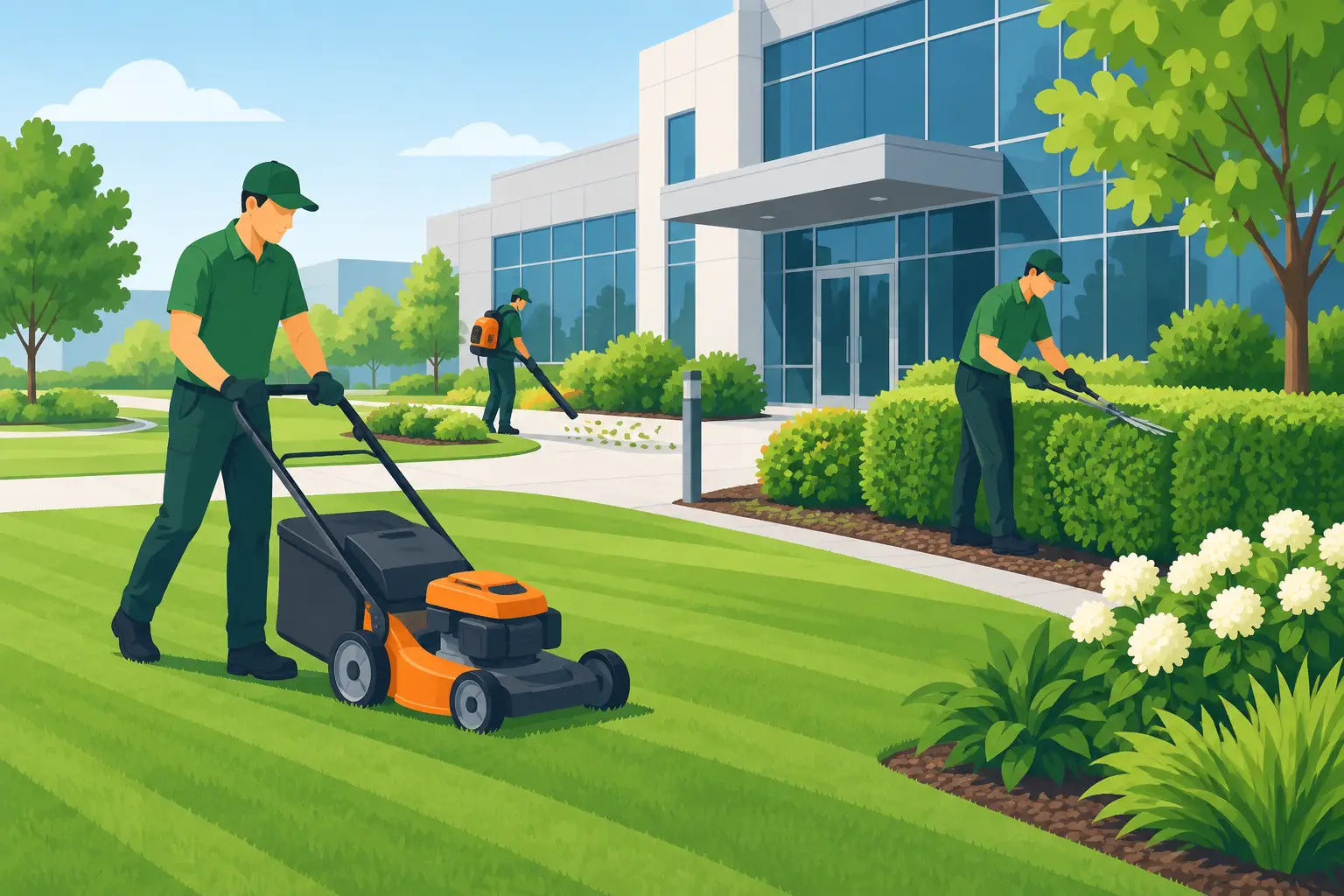
Essential Commercial Landscape Maintenance Tasks

A customer may never comment on freshly edged walkways or a properly adjusted irrigation zone. They will notice brown grass by the entrance, weeds around the sign, standing water near the parking lot, or shrubs blocking a window. Essential commercial landscape maintenance tasks keep those small problems from becoming a poor first impression, a safety concern, or an expensive repair.
For businesses, HOAs, medical offices, retail centers, apartment communities, and managed properties across Middle Georgia, landscape care is not just about mowing grass. It is a regular plan for keeping the entire exterior clean, healthy, functional, and presentable through changing weather and heavy use.
Keep Turf Consistent With Scheduled Mowing
Routine mowing is the foundation of commercial grounds care. A consistently cut lawn looks orderly, but the value goes beyond appearance. Proper mowing helps grass grow more evenly, reduces stress on the turf, and prevents an overgrown property from looking neglected between visits.
The right mowing schedule depends on the season, grass type, rainfall, and how visible the area is to customers or residents. During active growing periods in Middle Georgia, weekly service is often the practical choice. In slower seasons, properties may need less frequent attention. Cutting too much height at once can weaken the grass, so a dependable schedule is usually better than waiting until the property looks overgrown.
A complete mowing visit should also include trimming where mowers cannot reach and blowing grass clippings from walks, curbs, entrances, and parking areas. Clean hard surfaces matter. Clippings tracked into a lobby or storefront can make a well-kept property feel unfinished.
Edge Walkways, Curbs, and Landscape Beds
Edges are one of the clearest signs of professional maintenance. Grass creeping across sidewalks, curb lines, and bed borders makes a property look untidy even when the lawn itself has been cut. Regular edging creates a defined line between turf and hard surfaces, giving entrances, parking areas, and common spaces a cleaner appearance.
This task is especially useful around signs, mail kiosks, pool areas, patios, and high-traffic sidewalks. Those are the spaces visitors see up close. For HOAs and commercial sites, neat edges also help maintain a uniform standard across larger common areas.
Edging should be handled with care. Aggressive trimming can scalp turf or damage tree trunks, irrigation heads, and landscape borders. The goal is a crisp, natural-looking finish, not bare soil or damaged grass along every curb.
Control Weeds Before They Take Over
Weeds compete with grass and ornamental plants for water, nutrients, and space. They also spread quickly in thin turf, mulch beds, cracks along curbs, and around buildings. A few weeds near an entry can become a larger maintenance issue after a warm, wet stretch of weather.
Commercial weed control is most effective when it is ongoing. Crews should inspect beds, fence lines, pavement cracks, drainage areas, and turf edges during regular service. Pulling or treating small weed growth early is often simpler and less costly than restoring a bed that has been overtaken.
The method depends on the location. Hand removal may be the right approach around delicate plantings, while carefully selected treatments can help manage weeds in larger areas. Properties with pet-friendly common spaces, playgrounds, or frequent foot traffic may need a plan that accounts for how and when specific areas are used.
Maintain Shrubs, Hedges, and Trees for Visibility
Overgrown shrubs can cover windows, hide signs, crowd walkways, and make a building appear smaller or less cared for. Regular pruning keeps plants shaped, removes dead or damaged growth, and helps preserve clear sightlines around parking lots and entrances.
Visibility is a practical concern, not just a cosmetic one. Low branches near drive lanes, shrubs around light fixtures, and dense growth near doors can affect safety and security. Commercial properties should keep entrances, address markers, directional signs, security cameras, and lighting unobstructed.
Pruning should match the plant and the season. Some flowering shrubs can lose next season's blooms if they are cut back at the wrong time. Heavy pruning is not always the answer, either. In many cases, selective trimming throughout the year produces healthier plants and a more natural appearance than cutting everything into the same shape.
Refresh Mulch and Care for Landscape Beds
Landscape beds frame a building, monument sign, or entrance. When mulch is thin, faded, or scattered onto pavement, even healthy plants can look tired. Fresh mulch improves the appearance of beds, helps retain moisture, moderates soil temperature, and reduces weed growth.
Bed maintenance includes more than adding mulch. It means removing debris, defining bed lines, pulling weeds, checking plant health, and replacing plants that are damaged or no longer suited to the location. A bed near a front entrance may need more frequent attention than a planted area behind a building, so service priorities should reflect what visitors see most often.
More mulch is not always better. Piling it too deeply against plant stems or tree trunks can trap moisture and lead to problems. A properly maintained bed has an even layer of mulch with room around the base of plants.
Check Irrigation Before Dry Spots Appear
Irrigation problems often show up as brown turf, stressed shrubs, muddy areas, or an unexpectedly high water bill. Regular inspections help catch broken heads, clogged nozzles, leaks, poor coverage, and timer issues before plants suffer.
Commercial irrigation systems need seasonal attention because rainfall and temperatures change. A schedule that worked during a hot summer week may waste water during a cooler, rainy period. Zones should be adjusted for plant type, sun exposure, slope, and soil conditions rather than run on one fixed setting all year.
Irrigation repairs are also a good time to look for broader drainage concerns. Water pooling near sidewalks, foundations, parking areas, or turf can point to a damaged component, compacted soil, grading issue, or a zone that is running too long. Addressing the cause protects both the landscape and the property.
Remove Debris and Watch for Safety Issues
A polished commercial property can quickly look neglected after storms, high winds, or a busy weekend. Leaves, fallen branches, litter, pine straw, and loose mulch collect along curbs, in planting beds, near doors, and around drains. Regular cleanup keeps the property welcoming and helps drainage areas work as intended.
Crews should also watch for issues that need quick attention: low branches over walkways, exposed roots, damaged landscape borders, holes in turf, loose irrigation covers, or plants blocking access points. Not every concern requires immediate construction work, but early reporting gives a property manager time to make a decision before a small issue becomes disruptive.
For larger sites, it helps to establish clear service areas. A front entrance, leasing office, customer patio, or main sign may need more frequent detail work than low-visibility sections of the property. That is not cutting corners. It is putting maintenance effort where it has the greatest effect.
Build a Plan Around the Property, Not a Checklist
The best commercial landscape programs are consistent without being one-size-fits-all. A retail center with daily customer traffic has different priorities than an HOA with recreation areas, and both differ from an office property with a small, formal entry. The property size, plant material, irrigation system, budget, and desired appearance all affect the right service plan.
Peach Lawn Pros helps Middle Georgia property owners and managers coordinate recurring mowing, landscape upkeep, construction improvements, and irrigation repair through one dependable local team. That can reduce the hassle of calling separate providers when a routine maintenance visit reveals a broken sprinkler head or a bed that needs updating.
A well-maintained landscape does not need to be complicated. It needs regular attention, clear standards, and a crew that notices the details before customers, residents, or tenants do.
Comments