

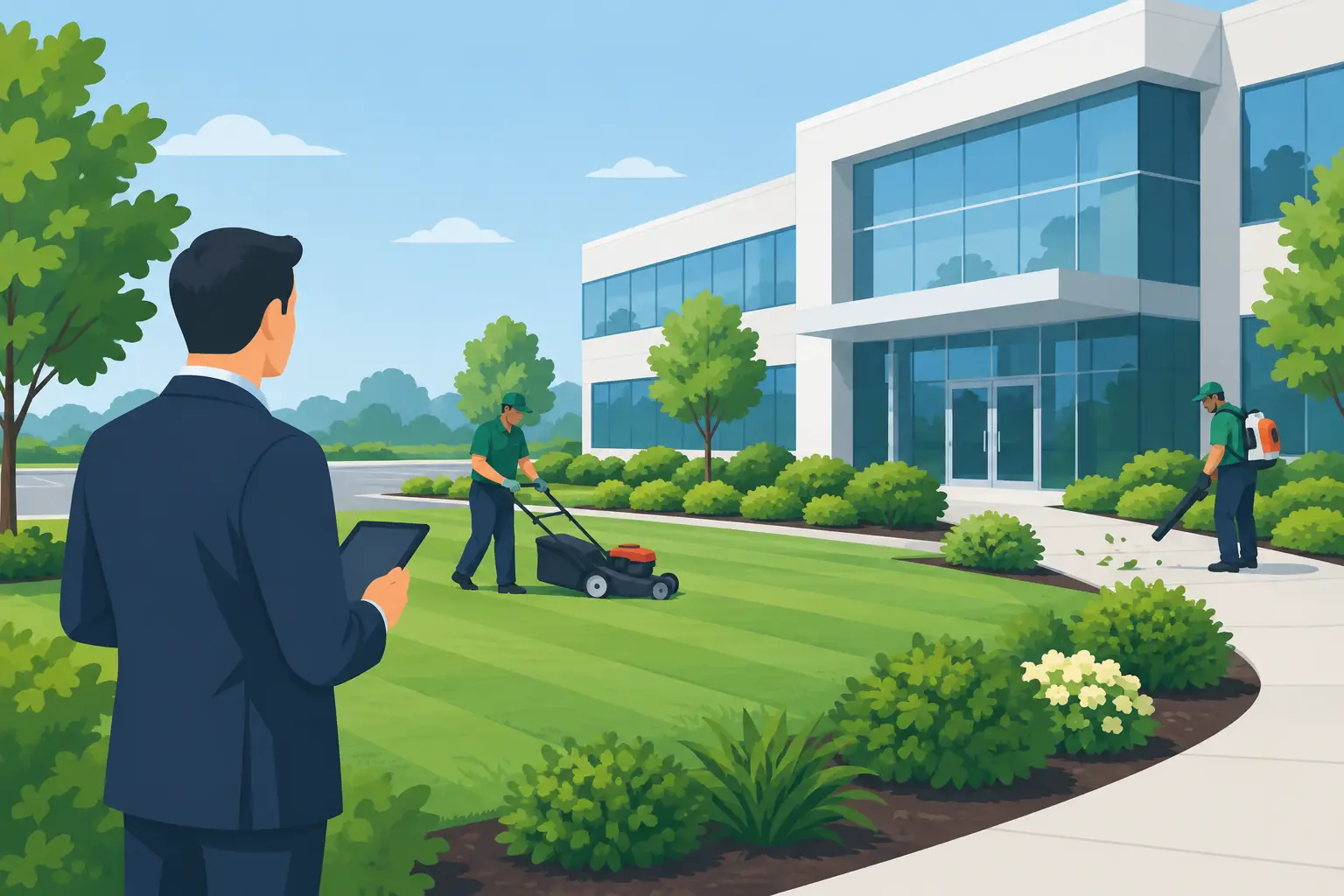
Commercial Grounds Maintenance Guide for Managers

A commercial property can look neglected long before the building does. Grass that is a week overdue, weeds at the entrance, dead plant material around signage, or standing water near a walkway all change how customers, tenants, and visitors view the site. This commercial grounds maintenance guide helps property managers build a practical plan for keeping outdoor spaces clean, safe, and presentable without managing a different contractor for every task.
For Middle Georgia properties, the goal is not to chase a perfect lawn every day of the year. It is to maintain a consistent standard through heat, heavy rain, active growing seasons, and the occasional cold snap. A dependable maintenance plan protects curb appeal while making service needs easier to budget and coordinate.
Start With the Property’s Daily Priorities
Commercial grounds care should reflect how people use the property. A medical office, retail center, apartment community, industrial site, and professional office park may all have lawns, but their priorities are different.
Customer-facing properties need tidy entrances, defined walkways, clean parking-lot edges, and landscape beds that look cared for when people arrive. Multi-tenant properties and HOAs also need consistent common areas, because residents and tenants notice differences from one section of the property to another. Industrial and warehouse sites may place more emphasis on clear sightlines, safe access routes, drainage, and keeping vegetation away from buildings, fences, and loading areas.
Walk the property with that purpose in mind. Look at it from the road, from parking spaces, and from the front door. Make note of the areas visitors see first, along with places that can create safety or maintenance problems if ignored. This walk-through gives your grounds provider a clear picture of what deserves regular attention and what can be handled as a seasonal project.
Build a Commercial Grounds Maintenance Schedule
A good schedule separates recurring work from work that only needs attention at certain times of year. This keeps routine service predictable and prevents small issues from becoming more expensive corrections later.
Weekly and biweekly service
During the active growing season, mowing frequency depends on grass growth, rainfall, irrigation, and the appearance standard expected at the property. Many commercial sites benefit from weekly mowing when turf is growing quickly. In slower periods, service may move to a different cadence, but the property should never look like it has been overlooked.
Routine visits should generally cover mowing, trimming around obstacles, edging along curbs and walkways, and blowing clippings from hard surfaces. Those finishing details matter. A freshly mowed lawn does not look finished if grass clippings cover the entrance sidewalk or weeds are pushing through the curb line.
The best mowing height depends on the turf type and conditions. Cutting too short may look neat for a few days, but it can stress the lawn, encourage weeds, and leave turf more vulnerable during hot, dry stretches. A professional crew should adjust practices based on the season rather than using the same approach all year.
Monthly site checks
Monthly inspections help identify concerns that are easy to miss during a standard mowing visit. Check shrub growth near windows, signs, drive lanes, and exterior lighting. Look for bare areas in turf, washouts after heavy rain, low spots that hold water, and mulch that has thinned enough to expose soil.
This is also a good time to review landscape beds. Weed control, light pruning, debris removal, and a clean bed edge keep plantings from looking tired. It is usually more affordable to keep beds maintained than to let them decline until they need a full renovation.
Seasonal work
Seasonal care gives the property a reset. Spring is often the time for bed cleanup, fresh mulch, pruning, irrigation start-up, and replacing plants that did not make it through winter. Summer calls for close attention to irrigation performance, turf stress, weeds, and storm debris.
Fall is useful for leaf cleanup, trimming back overgrown plant material, repairing worn areas, and preparing the site for cooler weather. Winter may be quieter for mowing, but it is a smart time to plan landscape improvements, inspect irrigation components, and address drainage or hardscape-adjacent issues before spring growth begins.
Put Irrigation on the Same Maintenance Plan
Water problems can affect a commercial landscape quickly. A broken sprinkler head can waste water and create muddy spots near sidewalks. A zone that is not operating can leave grass and plants stressed before anyone realizes there is a problem. Poor coverage can also make one part of the property look neglected while another area receives too much water.
Irrigation should be inspected regularly, especially at the beginning of the growing season and after landscaping changes. Crews should look for damaged heads, leaks, clogged nozzles, broken valves, poor spray direction, and controller settings that no longer match the weather or plant needs.
There is a trade-off here. Watering more is not always the answer to brown grass. Excess water can contribute to shallow roots, disease pressure, runoff, and higher utility bills. The right approach depends on the turf, soil, shade, rainfall, and condition of the system. Timely irrigation repair and sensible scheduling are usually more valuable than simply increasing run times.
Keep Safety and Access in the Plan
Grounds maintenance is part of property safety, not just appearance. Overgrown shrubs can block visibility at driveways and intersections. Low branches can interfere with parking, delivery access, or pedestrian routes. Uneven turf at curbs and drainage areas can create trip hazards, while standing water may signal a drainage issue that needs attention.
Ask your service provider to flag problems they see, even if those issues fall outside a routine mowing visit. A local crew that is on-site consistently is often the first to notice a damaged irrigation head, a downed limb, a failing plant, or runoff near an entrance. Quick communication gives managers time to approve the right fix before the issue affects visitors or tenants.
It also helps to establish site rules early. Let crews know where they can park, which areas need clear access, whether there are preferred service hours, and who should be contacted if a gate is locked or a concern comes up. Clear expectations reduce missed service and prevent avoidable disruptions.
Use One Provider When the Work Connects
Coordinating separate mowing, irrigation, and landscape contractors can work for some large properties with in-house facilities teams. For many local businesses, retail centers, and community managers, it creates extra calls, unclear responsibility, and delays when one issue affects another.
Using a provider that handles recurring lawn care, landscape construction, and irrigation work can make decisions simpler. If an irrigation repair is needed near a worn landscape bed, the same team can assess the full area instead of treating each problem in isolation. If drainage has damaged turf, the repair can be planned with the mowing schedule and any needed landscape improvements.
That does not mean every property needs every service at once. A well-run plan starts with essential recurring maintenance, then adds repairs or improvements when they will make a real difference. The point is to have a capable local partner available when needs change.
Set Clear Standards and Review Results
Commercial grounds maintenance works best when the expected result is clear. Rather than asking for a property to be kept “nice,” define what that means for your site. It may include crisp edges at the main entrance, litter-free common areas, trimmed shrubs below windows, healthy turf in highly visible spaces, and irrigation issues reported promptly.
Take a few reference photos after the property is looking its best. They can help communicate the standard to your maintenance team and make seasonal changes easier to spot. Schedule a periodic review as well, particularly before busy leasing periods, community events, or peak customer seasons.
When comparing service proposals, price matters, but it should not be the only question. Confirm what is included in routine visits, how often service is expected, how extra work is approved, and how irrigation or landscape concerns are communicated. A lower monthly price can become costly if key details are routinely left undone.
For commercial properties across Middle Georgia, reliable grounds care is one less operational task to chase. Peach Lawn Pros can help keep mowing, landscape needs, and irrigation work organized so your outdoor spaces stay ready for the people who use them every day.
Comments