

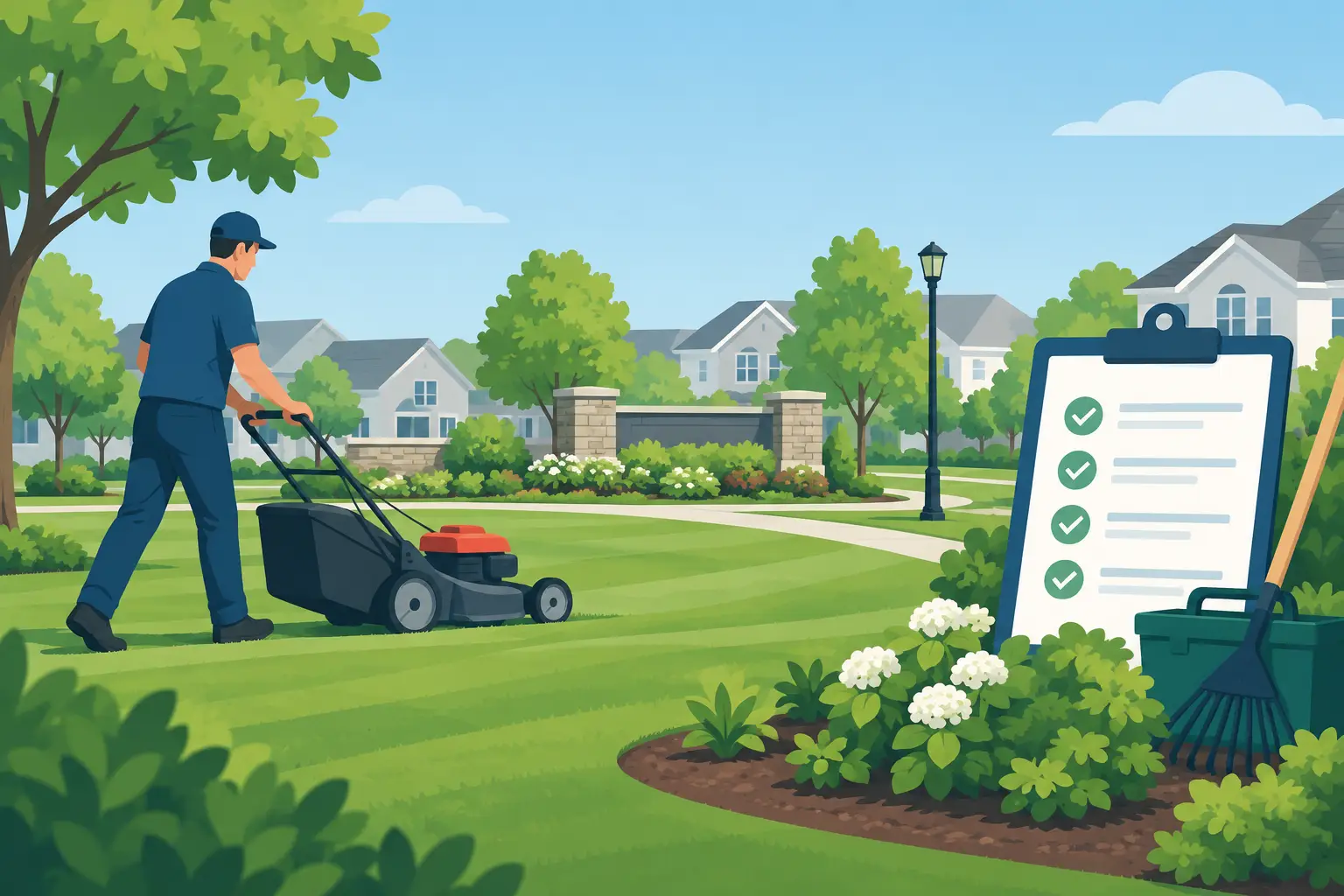
How to Maintain HOA Grounds Without Surprises

A missed mowing cycle, a brown entrance bed, or a sprinkler leak near the clubhouse can turn into more than a landscaping issue. For an HOA board or community manager, it can lead to resident complaints, emergency spending, and a property that feels less cared for than it should. Knowing how to maintain HOA grounds means building a dependable routine, noticing problems early, and working with providers who can handle more than one piece of the property.
The goal is not to make every common area look overly formal. It is to keep the community clean, safe, healthy, and consistent with the standards residents expect. That takes a practical maintenance plan that fits the property, the budget, and Middle Georgia's long growing season.
Start With a Clear Grounds Maintenance Standard
Before scheduling work, define what “well maintained” looks like for your community. Walk the property and identify every area the association is responsible for: entrances, medians, common lawns, sidewalks, retention pond edges, clubhouses, mail stations, playgrounds, parking areas, and landscaped beds.
Then set standards that can actually be checked. Grass should be kept at an appropriate height, edges should be clean, shrubs should not block signs or sidewalks, and debris should not sit in common areas for days. A written standard gives board members, managers, and maintenance providers the same expectations. It also makes vendor conversations much easier when a concern comes up.
Not every area needs the same level of attention. The entrance and clubhouse may need the most polished appearance because they are high-visibility spaces. A back common area may need safe, tidy upkeep without intensive ornamental landscaping. Prioritizing by visibility, use, and safety helps an HOA spend wisely instead of treating every square foot the same.
Build a Reliable Mowing and Cleanup Schedule
Recurring lawn mowing is the foundation of most HOA grounds plans. In Middle Georgia, grass growth can move quickly during late spring and summer. If service is too far apart, the crew may have to remove excessive grass at once, leaving clippings behind and putting unnecessary stress on the turf.
For many communities, weekly mowing during the active growing season keeps common areas looking consistent. During slower periods, a less frequent schedule may make sense. The right schedule depends on grass type, rainfall, irrigation coverage, tree shade, and the appearance standard the HOA wants to maintain.
Mowing should not be treated as an isolated task. Each regular visit should also include basic cleanup such as blowing clippings from walks and curbs, clearing visible debris, and maintaining defined edges where turf meets beds, pavement, or signs. These details are often what residents notice first.
Ask your maintenance provider what is included in a standard visit and what requires separate approval. For example, routine mowing and blowing are different from storm debris removal, leaf-heavy cleanup, brush clearing, or hauling away fallen limbs. Clear scope prevents frustration on both sides.
Keep Landscape Beds Simple Enough to Maintain
Landscape beds can make a community entrance look inviting, but they also create recurring labor and replacement costs. The best HOA plantings are not always the most elaborate. They are the ones that hold their appearance through local heat, rain, and seasonal changes without requiring constant attention.
Choose durable plant material that fits the amount of sun and irrigation available. Avoid placing water-hungry plants in areas where coverage is weak, and do not crowd shrubs so tightly that they will need severe pruning within a year or two. Mulch beds regularly to improve appearance, help retain moisture, and reduce weed growth.
Seasonal color can be worthwhile at an entrance or clubhouse, especially if the community uses those spaces to create a strong first impression. It should be a deliberate budget item, though, not an expectation added without funding for installation, watering, and replacement. In many cases, well-shaped shrubs, clean mulch, and healthy turf create a better long-term result than large seasonal displays that decline after a few weeks.
Prune for Safety and Appearance
Shrubs and small trees need planned pruning, not occasional cutting when they become a problem. Keep plants clear of building walls, sidewalks, street signs, lighting, and driver sightlines. Dead or low-hanging limbs should be addressed promptly where people walk, park, or play.
Be cautious about over-pruning. Cutting a shrub back too hard at the wrong time can leave bare growth, reduce flowering, or make the landscape look worse for months. A knowledgeable crew can shape plants according to their growth habits instead of turning every hedge into the same box.
Make Irrigation Inspections Part of Routine Care
A sprinkler system is one of the most useful tools for protecting HOA landscaping, and one of the easiest systems to ignore until a costly issue appears. Broken heads, leaks, poor coverage, and incorrect timers can waste water while still leaving turf and plants stressed.
Irrigation should be checked regularly, especially before peak summer heat. Run each zone and look for water spraying onto pavement, heads blocked by grass or mulch, dry patches, soggy spots, and zones that fail to turn on. A wet area that never dries may be a leak, while a brown strip along a sidewalk may point to a coverage problem.
Adjustments should follow the weather rather than a fixed year-round setting. Frequent rain may call for reduced runtime. Hot, dry stretches may require a change, but longer watering is not always the answer if the system has poor coverage or pressure issues. Watering early in the morning generally gives turf and plants a better chance to use the moisture before afternoon heat.
An HOA does not need a brand-new irrigation system to improve results. Repairs to valves, heads, lines, controllers, and damaged zones can often restore efficiency. When larger upgrades are needed, such as adding coverage to a new landscaped area, plan them alongside landscape construction instead of trying to patch them in afterward.
Plan Around the Seasons, Not Just Complaints
Reactive grounds care usually costs more. A better approach is to create a seasonal calendar that anticipates the work ahead.
In spring, focus on mowing startup, mulch, bed cleanup, irrigation checks, pruning as appropriate, and replacing plants damaged by winter weather. Summer calls for consistent mowing, weed control, irrigation monitoring, litter removal, and attention to heat-stressed plant material. In fall, prepare for leaf cleanup, reduce irrigation as conditions allow, refresh beds, and inspect drainage areas before heavier seasonal rain. Winter is a good time for selective pruning, clearing storm damage, addressing drainage concerns, and planning landscape improvements before the busy growing season returns.
The exact timing will vary each year. Weather matters more than the calendar. Still, a seasonal plan keeps the board from making every decision after the property already looks neglected.
Inspect the Property Like a Resident Would
A monthly walkthrough is one of the simplest ways to maintain HOA grounds well. Board members or managers should take the same route a resident, visitor, or prospective buyer might take. Start at the entrance, drive the main roads, visit amenities, and walk the most-used common areas.
Look beyond the grass. Check for faded mulch, weeds at signs, limbs over sidewalks, standing water, damaged irrigation heads, overflowing pet waste stations, failing landscape lights, and plants blocking visibility. Take dated photos and send one organized list to the maintenance provider rather than sending scattered requests throughout the month.
This also helps separate routine maintenance from capital needs. A dead shrub may be a simple replacement. Repeated washouts, failing drainage, widespread irrigation problems, or declining mature trees may need a larger project and board approval. Knowing the difference helps the HOA budget accurately.
Choose Providers Who Can Handle the Whole Property
Using separate contractors for mowing, beds, irrigation, and small landscape projects can work, but it requires more coordination from the manager or board. For many communities, working with one dependable local provider for recurring care and related repairs simplifies communication and helps problems get spotted sooner.
That does not mean every service should be bundled without review. Compare the scope, visit frequency, response expectations, and pricing. A low monthly quote can become expensive if it excludes the cleanup, irrigation attention, or landscape repairs the property actually needs.
Peach Lawn Pros works with HOA and property management clients throughout Middle Georgia to provide recurring mowing, landscape construction, and irrigation repair and installation. For a community that needs dependable upkeep without juggling multiple outdoor vendors, that range of services can make day-to-day grounds management much easier.
Keep Residents Informed When Work Affects Them
Residents are usually more patient with maintenance when they know why work is happening. A short notice about pruning, irrigation repairs, mulch installation, or temporary access restrictions can prevent avoidable complaints. It also reinforces that the association is maintaining the property proactively.
Use resident feedback as useful information, but do not let every comment become an emergency. Track repeated concerns. If several residents mention the same wet area, overgrown corner, or unattractive entrance bed, it may point to a real maintenance gap worth addressing.
Well-maintained HOA grounds do not happen through one major cleanup. They come from steady mowing, healthy irrigation, practical landscaping, regular inspections, and clear communication. When those basics are handled consistently, the community looks cared for before residents have a reason to ask why it does not.
Comments