

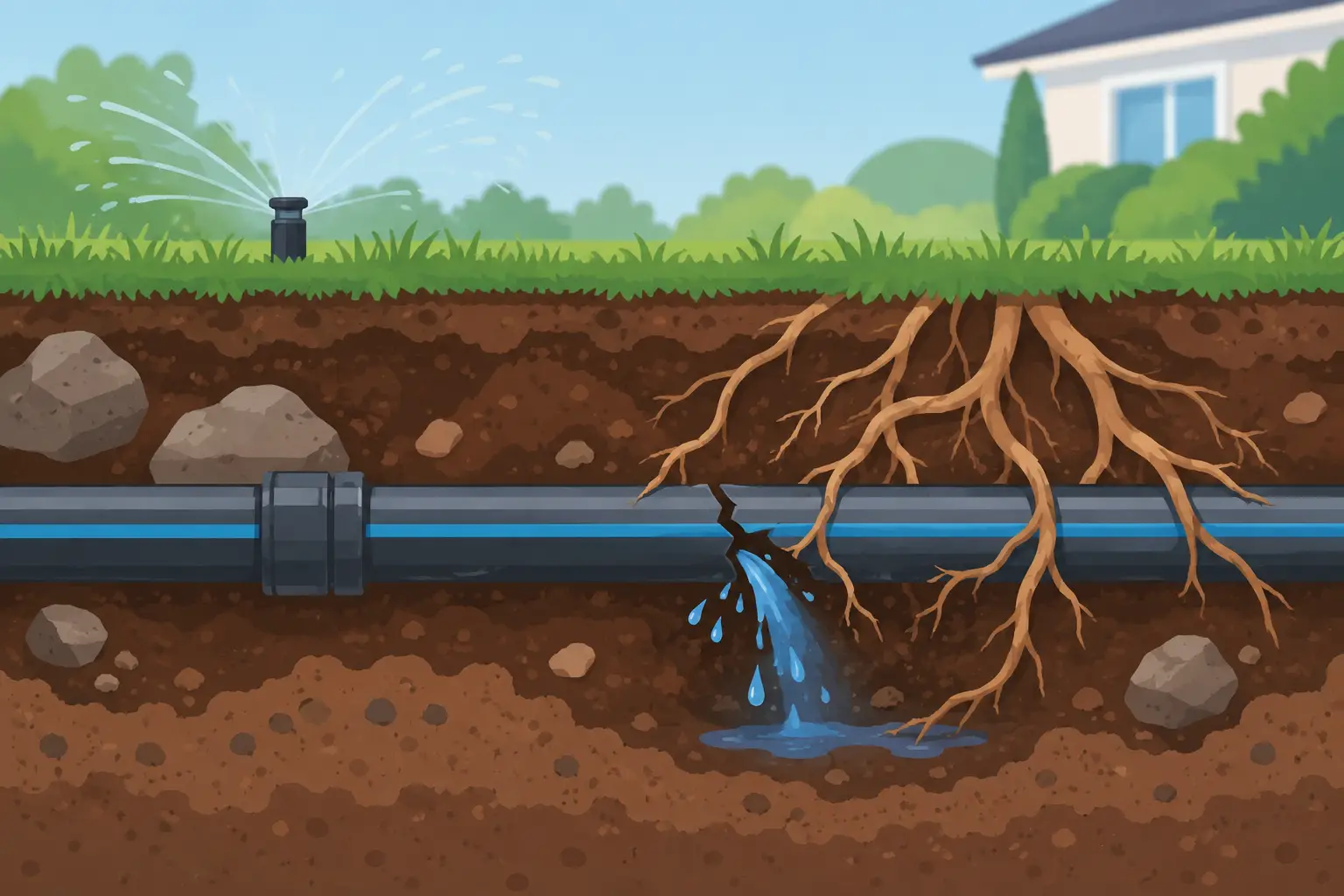
What Damages Underground Irrigation Pipes?

A sprinkler zone that suddenly runs weak, a soggy patch that never dries, or water bubbling up beside a walkway usually points below the surface. Understanding what damages underground irrigation pipes can help Middle Georgia property owners catch a small repair before it becomes a washed-out landscape bed, wasted water, or a high utility bill.
Underground irrigation is built to stay out of sight, but it is not immune to pressure, shifting soil, roots, weather, and everyday work in the yard. The good news is that most pipe damage has recognizable causes and early warning signs.
What Damages Underground Irrigation Pipes Most Often?
Lawn equipment and digging accidents
Accidental cuts are among the most common causes of irrigation pipe damage. Edgers, trenchers, post-hole diggers, shovels, aerators, and landscape equipment can all reach shallow irrigation lines. A new mailbox, fence, tree, shrub, landscape border, or outdoor lighting project can create the same problem.
Pipes are often installed at depths that protect them from normal lawn activity, but depth varies by system, soil conditions, and the work done during installation. A line near a valve box, sprinkler head, landscape bed, or previous repair may be closer to the surface than expected.
This type of damage does not always create an immediate geyser. A nicked PVC pipe or fitting may leak only when that zone is running. Over time, the water can soften the surrounding soil, undermine edging or pavement, and put extra strain on the rest of the line.
Tree roots and large shrub roots
Roots do not usually crush a sound irrigation pipe overnight. Instead, they grow toward moisture, work around fittings, and put steady pressure on pipes over years. Roots can move a line out of position, break a fitting, or worsen a small existing crack.
Older trees and dense shrubs deserve extra attention, especially when irrigation pipes run close to the root zone. If a repair is needed near established roots, the right approach depends on the location. Cutting major roots may harm the tree, while simply patching the pipe without addressing root pressure may lead to another leak later.
Soil movement and settling
Georgia soils can expand, contract, settle, and shift with changing moisture levels. Heavy rain can move soil around a pipe, while long dry periods can leave soil hard and compacted. As the ground moves, rigid PVC pipe and glued fittings may be stressed.
This is particularly common around recently built homes, filled areas, slopes, drainage paths, and spots where soil was disturbed for landscaping or utility work. A pipe can separate slightly at a fitting or develop a crack that only becomes obvious once water pressure is applied.
Poor drainage adds another layer of risk. If runoff repeatedly travels through the same area, it can erode soil around irrigation lines and expose shallow pipes. The irrigation system may not be the original cause, but it can become part of a bigger drainage problem.
Freezing temperatures
Middle Georgia does not experience long, severe winters every year, but a hard freeze can still damage irrigation components. Water left in a pipe, backflow device, valve, or exposed connection can freeze and expand. That pressure may crack a fitting or pipe section.
Below-ground pipes are better insulated by soil than above-ground parts, so freeze damage often shows up first at exposed equipment or shallow lines. Still, a system with poor drainage or a low spot that holds water can be vulnerable. Winterizing needs vary by system and property, but protecting exposed components before a freeze is a practical precaution.
Water pressure problems and failing components
Too much pressure can stress pipes, fittings, valves, and sprinkler heads. Pressure spikes may come from a plumbing issue, a failed pressure regulator, or a system that was not designed for the available water supply. The damage may develop slowly, then show up as a split fitting or recurring leak.
A malfunctioning valve can also create trouble. If a valve closes too quickly, the sudden change in flow can create a pressure surge sometimes called water hammer. Older pipe, weak fittings, and previous repairs are more likely to fail under that extra force.
Not every broken pipe means the whole system has a pressure problem. But when leaks happen repeatedly in different zones or at multiple fittings, testing the operating pressure is worthwhile.
Age, installation quality, and previous repairs
Irrigation systems have working lives, and their weakest point is often a connection rather than the pipe itself. Glue joints, threaded fittings, swing joints, valves, and repairs can deteriorate with age or fail if they were installed under stress.
A poorly supported line may flex every time the zone turns on. Pipes that were buried with rocks pressing against them can be damaged as the soil settles. Repairs made with mismatched materials or without enough room for proper fittings may hold temporarily but fail again under normal pressure.
This does not mean an older system needs complete replacement after one leak. A professional inspection can help determine whether the issue is isolated or part of a broader pattern.
Signs an Underground Irrigation Pipe May Be Leaking
A leak is not always visible while the sprinklers are off. Watch for changes that do not match your normal watering pattern, especially if they occur in one area of the yard or only when a specific zone runs.
A soft, muddy, or unusually green patch of turf
Water pooling around a sprinkler head, valve box, sidewalk, or curb
Low pressure or weak spray in one irrigation zone
A sprinkler head that will not rise fully or sprays inconsistently
Soil erosion, sinking ground, or mulch that keeps washing away
A water bill that rises without a clear reason
Some signs can have other causes. A low-pressure zone, for example, may have a clogged nozzle, damaged sprinkler head, or valve issue rather than a broken supply line. That is why isolating the affected zone matters before digging.
How to Avoid Damaging Irrigation Lines
The simplest protection is knowing where the system runs before any digging starts. Keep a basic map of valve boxes, controller locations, sprinkler heads, and known pipe routes when possible. It does not need to be perfect. Even a few notes and photos can save time during future landscape work.
Before installing plants, hardscape, fencing, lighting, or drainage improvements, locate sprinkler heads and run the system to see which areas each zone covers. Marking visible heads is helpful, but remember that supply pipes may run between them or branch toward valves.
Use care with routine lawn work as well. Deep edging around beds, aggressive aeration near shallow lines, and driving heavy equipment over wet ground can all create problems. If a sprinkler head is too close to a drive, walkway, or bed edge, having it moved is often better than repeatedly working around it.
Good maintenance reduces surprises. Periodically run every zone and look for uneven coverage, pooling water, stuck heads, and wet areas after the cycle ends. Catching a small leak early protects your turf and prevents water from working its way under hardscape or into landscape beds.
When to Call for Irrigation Repair
A visible break, flooding, or a zone that will not shut off calls for prompt service. Turn off the irrigation controller or the water supply to the system if you can do so safely, then avoid digging until the source is identified. Digging into saturated soil without knowing the pipe layout can turn one break into two.
For less obvious issues, a technician can run the affected zone, check pressure, inspect valves and heads, and locate the likely source of the leak. The repair may be as simple as replacing a fitting or damaged head. In other cases, the best fix may include rerouting a line away from roots, correcting drainage, or replacing a worn valve.
Peach Lawn Pros provides irrigation repair and installation for property owners and managers who need a clear, practical solution without coordinating multiple outdoor contractors. Whether the issue is a small wet spot or a zone that has stopped performing, addressing it early helps protect the landscape you work hard to maintain.
If your lawn is showing one of those quiet signs of trouble, do not wait for a small leak to create a larger repair. A timely inspection can keep water going where it belongs - on your landscape, not under it.
Comments