

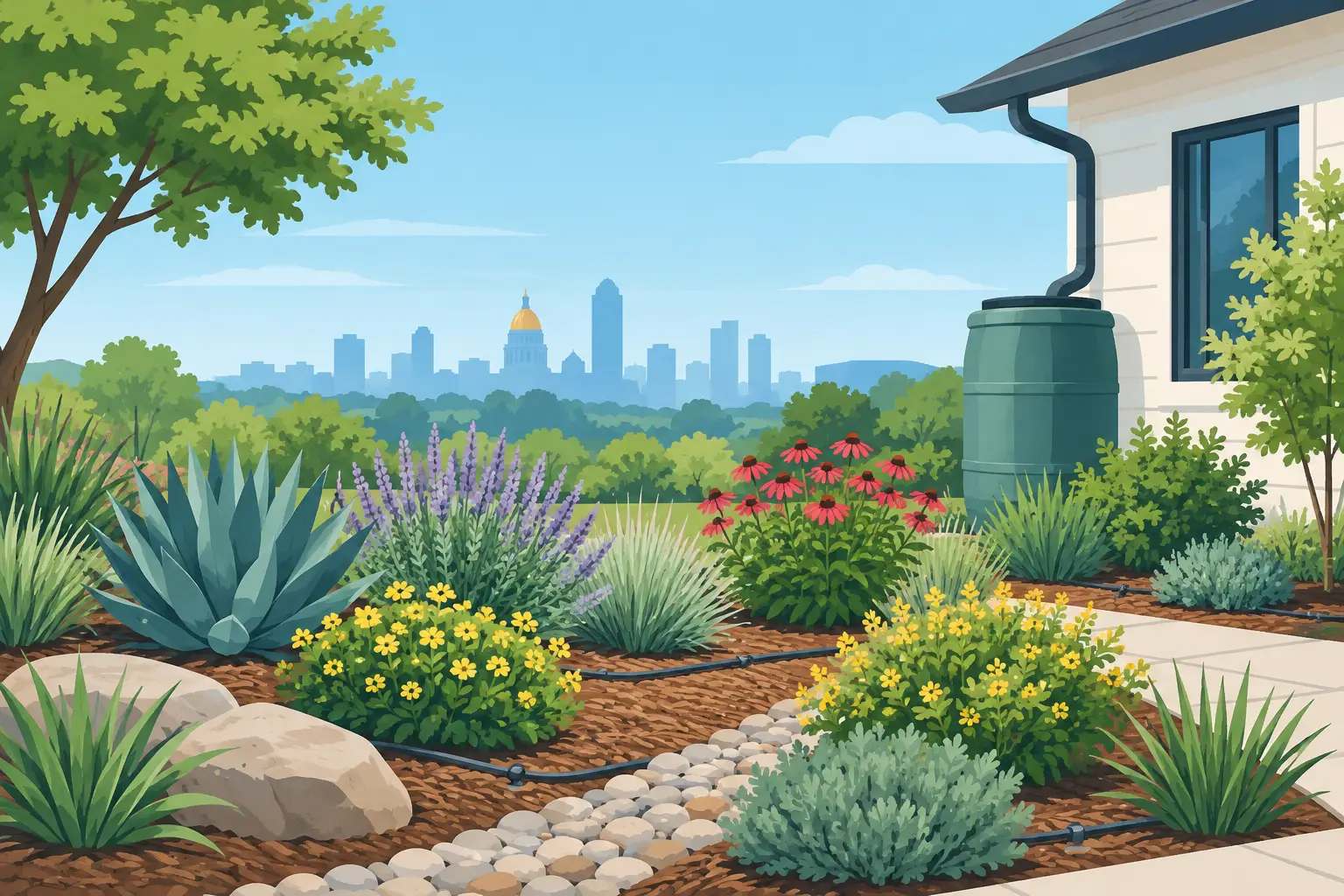
Water Efficient Landscaping Trends for Georgia

A sprinkler system that runs every morning can make a property look cared for, but it can also send water straight into the street, onto sidewalks, or through soil that is already saturated. That is why water efficient landscaping trends are gaining attention across Middle Georgia. Property owners want attractive lawns and planting beds that can handle summer heat without wasting water or creating a higher maintenance burden.
Water-wise landscaping does not mean replacing every bit of turf with rock or settling for a dry-looking property. For most homes, HOAs, and commercial sites, it means making practical changes to plant choices, irrigation practices, mulch, and layout. The goal is simple: use water where it does the most good and build a landscape that holds up better between rainstorms.
Water Efficient Landscaping Trends That Work Locally
The best trends are not just popular ideas from another climate. They are approaches that make sense for Central Georgia's hot summers, frequent heavy rain, clay soils, and occasional dry stretches. A plan that looks good on paper but requires constant hand watering is not an efficient plan.
Smarter irrigation controls
Traditional irrigation timers run on a fixed schedule. They may water after a soaking rain or keep running when temperatures are mild and plants need less moisture. Smart controllers and rain sensors help correct that problem by adjusting schedules based on weather conditions, rainfall, or soil moisture.
This upgrade can be especially useful for HOA entrances, commercial frontage, and larger residential properties with multiple irrigation zones. It gives managers more control without needing someone to reset the system every time the weather changes. Still, technology is only as good as the system it controls. A smart controller cannot fix broken sprinkler heads, clogged nozzles, leaks, or zones with poor coverage.
Regular irrigation inspections remain part of an efficient setup. Heads should spray plants and lawn areas, not pavement. Drip lines should deliver water slowly at the root zone. Valves, timers, and rain sensors should be checked before the busiest growing season begins.
Hydro-zoning plants by water needs
One of the most useful landscape design changes is grouping plants with similar water requirements together. This is called hydro-zoning. It prevents a common problem: thirsty annual flowers, shrubs, and turf grass all share one irrigation zone, so everything gets watered as if it needs the same amount.
For example, a foundation bed with established shrubs may need less water than a sunny annual color bed near an entrance. Separating those areas allows each one to receive a more appropriate schedule. It also makes seasonal adjustments easier.
Hydro-zoning is most effective during a landscape renovation or new construction project, but smaller improvements can be made over time. A property owner might begin by converting one high-water bed or adjusting an irrigation zone that serves a mix of turf and ornamentals.
Native and heat-tolerant plant selections
More properties are choosing plants that can tolerate Georgia heat, humidity, and periods of lower rainfall once established. Native plants can be a good fit because they are adapted to regional conditions, although native does not automatically mean no-maintenance or no-water. New plantings still need consistent watering while their root systems develop.
Heat-tolerant shrubs, ornamental grasses, perennials, and groundcovers can reduce the need for frequent irrigation in the right location. They can also bring texture and seasonal interest without relying entirely on water-hungry annual color.
Plant selection should match the site. A plant that performs well in full sun may struggle in shade or in a low area that stays wet after storms. Before replacing a bed, consider how much sun it receives, how the soil drains, and whether nearby trees compete for moisture. Choosing the right plant for the spot is often more valuable than choosing the trendiest plant at the garden center.
Smaller, more purposeful turf areas
Healthy turf still has a place in Georgia landscapes. It provides usable space for families, pets, residents, and customers, while giving a property a clean, finished appearance. The trend is not necessarily eliminating lawn areas. It is using turf where it serves a purpose and reducing it in spots that are difficult to mow, heavily shaded, steep, or constantly stressed by heat.
A narrow strip of grass between pavement and a building, for instance, may require more water and maintenance than it is worth. Replacing that strip with a properly designed planting bed can reduce mowing and irrigation needs while improving the appearance of the area.
For larger commercial or HOA properties, this approach can be applied to selected common areas rather than the whole site. That keeps open lawn where it is useful while cutting down on high-maintenance turf in less visible or less functional locations.
Mulch that protects soil moisture
Mulch is one of the simplest tools in water-efficient landscaping. A properly mulched bed helps slow evaporation, moderates soil temperatures, reduces weed competition, and keeps the landscape looking neat. Pine straw, pine bark, and other organic mulch options are common choices in Middle Georgia.
Mulch needs attention to be effective. It should be replenished as it breaks down, but it should not be piled against tree trunks or shrub stems. Thick mulch volcanoes around trees can trap moisture against the bark and create health problems. A clean, even layer is the better approach.
Mulch is also not a replacement for correcting poor drainage. If a bed stays soggy after every rainfall, the answer may involve grading, drainage improvements, or different plant choices rather than simply adding more mulch.
Designing for Rainfall, Not Just Irrigation
Georgia receives plenty of rain over the course of a year, but it does not always arrive when plants need it. Heavy downpours can quickly run off compacted soil, sloped lawns, parking areas, and rooflines. Water-efficient landscapes are increasingly designed to slow that water down and guide it into areas where it can soak in.
Drainage improvements and rain gardens
Downspout extensions, grading adjustments, dry creek beds, and rain gardens can help manage runoff on the right property. A rain garden is a planted area designed to collect and filter runoff for a short period after a storm. It is not meant to remain a permanent pond.
These features can be especially helpful where water washes mulch out of beds, pools near buildings, or crosses sidewalks. They must be planned carefully, though. Drainage work should direct water away from structures and avoid creating new issues for neighboring properties or common areas.
Healthier soil and less compaction
Soil condition often decides how efficiently a landscape uses water. Compacted clay soil sheds water instead of absorbing it, while soil with organic matter can hold moisture more effectively around plant roots. Aeration, proper mowing practices, and thoughtful bed preparation can improve how water moves through the landscape.
For lawns, mowing at the appropriate height helps shade the soil and support deeper roots. Cutting grass too short may make it look tidy for a day, but it can increase stress during hot weather and lead to more watering needs. A consistent mowing schedule that follows seasonal growth is part of efficient lawn care, not separate from it.
Where Water Savings Can Go Too Far
Reducing water use should not mean neglecting the landscape. Newly installed sod, trees, shrubs, and flowers require watering while they become established. Cutting irrigation too quickly after installation can lead to weak roots, plant loss, and the cost of replacing materials later.
There is also a balance between low-water design and curb appeal. An HOA entrance or business storefront may need seasonal color and more detailed maintenance than a low-traffic area behind a building. The practical answer is to place higher-water, high-impact plantings where people will see them and use more durable plantings in larger background areas.
Irrigation should be adjusted seasonally rather than turned on and forgotten. Hot, dry weeks may require more frequent watering, while rainy periods may require none at all. Watching plant health and soil moisture is more reliable than following the same schedule every month.
A Practical Starting Point for Your Property
The most effective first step is usually an irrigation and landscape review. Look for overspray, leaking heads, bare turf, washed-out mulch, standing water, and plant beds that need frequent attention to stay presentable. Those visible problems often point directly to wasted water or a design issue that can be corrected.
For properties with recurring maintenance needs, water efficiency works best when mowing, bed care, irrigation repairs, and improvements are considered together. Peach Lawn Pros helps Middle Georgia property owners manage those connected needs, from routine landscape upkeep to irrigation repair and new landscape construction.
A water-efficient landscape should make the property easier to care for, not harder. Start with the areas that waste the most water or require the most repeated attention, then make improvements that fit the way the property is actually used.
Comments